What Your Mouth Is Quietly Telling You About the Rest of Your Health
꧁ Digital Diary ༒ Wefru – India's Largest Writing Community ༒ Read, Write & Grow ༒꧂

꧁ Digital Diary ༒ Wefru – India's Largest Writing Community ༒ Read, Write & Grow ༒꧂
Scan QR code to visit our website
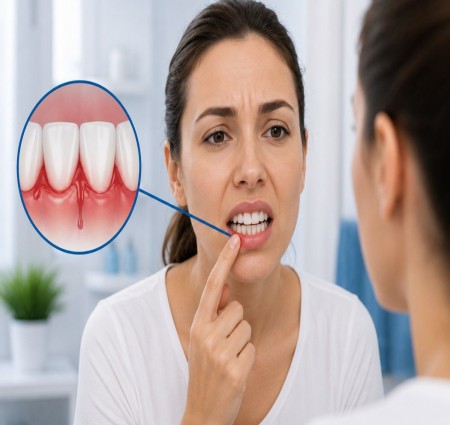
We tend to think of the mouth as its own sealed department. Teeth over here, the rest of your health over there, and never the two shall meet. Dentists deal with cavities, doctors deal with everything else.
That division is convenient and largely wrong. The mouth is one of the most revealing windows into overall health that exists, which is why dentists sometimes spot the first signs of a problem that has nothing obviously to do with teeth. The tissues in your mouth respond to what's happening in the rest of your body, often early and often visibly.
Here's what your mouth can quietly reveal, and why the six-monthly dental check is doing more general-health work than most people realise.
Start with one of the best-established connections: gum disease and diabetes.
The relationship runs both ways. High blood sugar makes gum disease worse and harder to control, and severe gum inflammation can in turn make blood sugar harder to manage. Because of this two-way link, dentists sometimes see signs suggesting a patient's blood sugar may be poorly controlled, or occasionally spot gum disease severe or persistent enough that undiagnosed diabetes is worth ruling out with their GP.
Gums that are repeatedly inflamed, slow to heal, or prone to abscesses despite decent oral care can be one of the body's quieter flags. It's not a diagnosis a dentist makes, but it can be the nudge that sends someone to get their blood sugar checked.
The pattern of wear on teeth tells a story, and one particular pattern points away from the mouth entirely.
When the enamel on the inner surfaces of the upper front teeth, the side facing the tongue, is worn smooth and thin while the outer surfaces look relatively fine, dentists take note. That specific distribution is often caused by stomach acid reaching the mouth, which can point to acid reflux, sometimes silent reflux the person didn't know they had.
Reflux that shows up as dental erosion is worth taking seriously, because chronic acid exposure affects more than teeth. A dentist noticing this pattern may be the first to suggest getting the underlying reflux looked at, which matters for the oesophagus as well as the enamel.
A persistently dry mouth is easy to dismiss as trivial, but it's both a cause of dental problems and a possible signal in itself.
Saliva does a lot of quiet work: neutralising acid, washing away food, and keeping bacteria in check. When it dries up, decay and gum problems accelerate, which is why dry mouth matters dentally. But the causes reach well beyond the mouth. Dozens of common medications cause it as a side effect, so a newly dry mouth can prompt a useful conversation about what someone's taking. Certain medical conditions and autoimmune disorders also reduce saliva, so persistent unexplained dryness is worth mentioning to a doctor as well as a dentist.
The soft tissues of the mouth, the tongue, cheeks, gums and palate, reflect general health in several ways.
Recurring mouth ulcers can sometimes relate to nutritional deficiencies, such as low iron, vitamin B12 or folate, or occasionally to underlying conditions. A sore, swollen or unusually smooth tongue can also point to deficiencies. Persistent white or red patches that don't clear up are important for a different reason: they're among the things a dentist checks for during the soft-tissue part of an examination, because early detection of oral cancers dramatically improves outcomes.
This soft-tissue check takes about a minute and is one of the genuinely valuable, under-appreciated parts of a routine dental visit. For most people, it's the only time all year a trained clinician deliberately examines these tissues.
Your mouth also carries the marks of how you're living, not just your medical conditions.
Worn, flattened teeth, a sore jaw and fine cracks in the enamel point to grinding and clenching, which is strongly tied to stress and is usually unconscious and nocturnal. Many people learn they're under more strain than they'd admit from what their teeth are doing at night.
There's a sleep connection too. Grinding often travels with disrupted sleep and, in some cases, with signs that prompt a dentist to ask about snoring or daytime tiredness. Features like a scalloped tongue or particular wear patterns can occasionally be part of a bigger picture worth investigating, sometimes leading to a conversation about sleep quality that the person hadn't connected to their mouth at all.
For reliable, non-commercial background on the links between oral health and general health, Healthdirect, the Australian Government's health information service, is a trustworthy place to read more.
Put all this together and the routine dental visit starts to look less like a teeth-cleaning appointment and more like a broad health check that happens to centre on the mouth.
In the course of a normal examination, a dentist is reading the gums, the wear patterns, the soft tissues, the amount of saliva, and the overall picture, and any of these can surface something that matters beyond your teeth. None of it replaces seeing your doctor, and a good dentist is careful to refer rather than diagnose outside their lane. But as an early-warning system, the mouth is remarkably informative, and the person looking into it twice a year is well placed to notice when something has changed.
That's a strong argument for not skipping check-ups even when your teeth feel fine. You're not just having your teeth checked; you're giving a trained clinician a regular look at one of the body's more honest windows. If you're overdue, a practice such as Bradbury Dental Surgery, an experienced dental team in Campbelltown, can give your mouth the kind of thorough look that catches both the dental problems and the occasional signal of something worth following up elsewhere.
Your mouth and the rest of your body aren't separate systems, and the signs the mouth shows, inflamed gums, eroded enamel, a dry mouth, worn teeth, changes in the soft tissues, can reflect what's happening well beyond it. Diabetes, reflux, stress, nutritional gaps and more can all leave traces a dentist is trained to spot.
So the next time a dental visit feels like something you can put off, remember what it actually is: a regular, close look at a part of you that tends to tell the truth about the rest. That's worth keeping up, teeth trouble or not.
Verified Brand
We tend to think of the mouth as its own sealed department. Teeth over here, the rest of your health over there, and never the two shall meet. Dentists deal with cavities, doctors deal with everything else.
That division is convenient and largely wrong. The mouth is one of the most revealing windows into overall health that exists, which is why dentists sometimes spot the first signs of a problem that has nothing obviously to do with teeth. The tissues in your mouth respond to what's happening in the rest of your body, often early and often visibly.
... Read MoreHave a question about this post? Send it straight to the author — only they will see it.
We are accepting Guest Posting on our website for all categories.

mouth-health-signs
Verified Author Expert@DigitalDiaryWefru