Blog by CryptoAPE | Digital Diary

" To Present local Business identity in front of global market"

Meri Kalam Se
Digital Diary Submit Post CryptoAPE

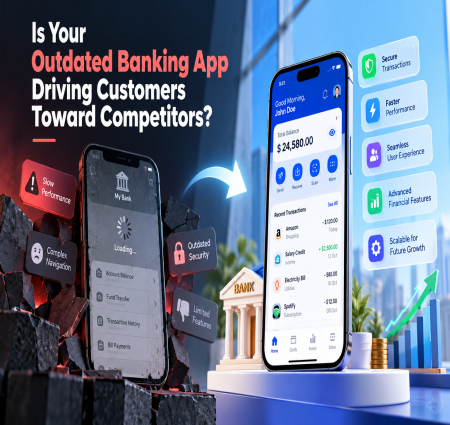
Is Your Outdated Banking App Driving Customers Toward Competitors? A Fintech App Development Guide

Is Your Outdated Banking App Driving Customers Toward Competitors? A Fintech App Development Guide
Imagine a customer trying to transfer money through your banking app. The screen keeps loading, the transaction status remains unclear, and logging in takes longer than expected. Instead of trying again, the customer starts looking for a better digital banking experience. For banks, financial institutions, and fintech startups, this is a real business challenge. Customers increasingly expect conve... Read More
Imagine a customer trying to transfer money through your banking app. The screen keeps loading, the transaction status remains unclear, and logging in takes longer than expected. Instead of trying again, the customer starts looking for a better digital banking experience. For banks, financial institutions, and fintech startups, this is a real business challenge. Customers increasingly expect convenient payments, reliable transactions, and secure access to their finances. So, how can you prevent an outdated banking app from affecting customer retention? The answer starts with identifying usability problems and investing in the right fintech app development strategy. Quick Answer: How Can Better Banking App Development Reduce Customer Loss? Modern banking app development helps businesses improve customer retention through faster navigation, reliable transactions, stronger authentication, real-time notifications, and simplified financial services. Working with a capable Fintech App Development Company can help identify technical limitations, modernize existing systems, and build a secure mobile banking experience around customer needs. 5 Signs Your Banking App Needs an Upgrade 1. Customers Struggle With Everyday Transactions Customers expect routine activities, such as checking balances, transferring funds, and reviewing transaction history, to be straightforward. If users must navigate multiple screens or repeatedly enter information, simple tasks become frustrating. A redesigned interface with clear navigation and fewer unnecessary steps can make everyday banking easier. 2. Slow Performance Damages User Confidence An app that freezes during payments or takes too long to display account information creates uncertainty. For example, a customer might submit a payment but receive no confirmation. They may hesitate to retry because they do not know whether the money was transferred. Modern financial app development should prioritize performance monitoring, clear transaction statuses, and reliable backend communication. 3. Security Features Feel Confusing or Outdated Security is essential, but complicated authentication can discourage legitimate users from completing transactions. Consider implementing appropriate multi-factor authentication, biometric login where supported, device monitoring, and transaction alerts. These features should be designed around the application's risk profile without weakening essential security controls. 4. Your App Lacks Features Customers Expect Limited functionality can make customers rely on competing financial applications for everyday needs. Depending on your business model, useful features may include: Instant payment notifications Digital account onboarding Spending summaries and budgeting tools Secure document uploads Customer support through chat Integration with payment gateways and financial systems Choose features based on customer feedback and actual usage patterns rather than adding functionality simply to follow trends. 5. Maintaining the Existing System Is Becoming Difficult Legacy banking software can make new integrations, security updates, and feature releases more complicated. A fintech software development team can assess whether targeted improvements, backend modernization, or a complete rebuild makes the most sense. How a Fintech App Development Company Can Help The right development partner should do more than create attractive screens. It should understand financial workflows, integration requirements, security considerations, and long-term maintenance. A practical development process includes: Application audit: Identify performance bottlenecks, usability issues, and outdated dependencies. Customer experience planning: Map common journeys, including registration, payments, and account recovery. Architecture and integration: Connect banking services, payment systems, and APIs through appropriate interfaces. Security testing: Evaluate authentication, access controls, data protection, and transaction handling. Launch and monitoring: Track errors, application performance, and customer feedback after deployment. If you're planning a new financial product or modernizing an existing platform, explore our fintech app development services. Upgrade Your Banking App Without Guesswork You do not necessarily need to replace your entire application immediately. Start by examining customer complaints, app-store reviews, support tickets, transaction failures, and analytics. Prioritize issues that affect essential banking tasks, then measure whether improvements reduce friction and increase successful task completion. A trusted Fintech App Development Company can help you evaluate modernization options and build a roadmap that fits your technical requirements, budget, and business goals. Ready to improve your digital banking experience? Contact CryptoApe to discuss your fintech application requirements and explore a suitable development approach.
Read Full Blog
[email protected] 20 Oct 2026 174 Views

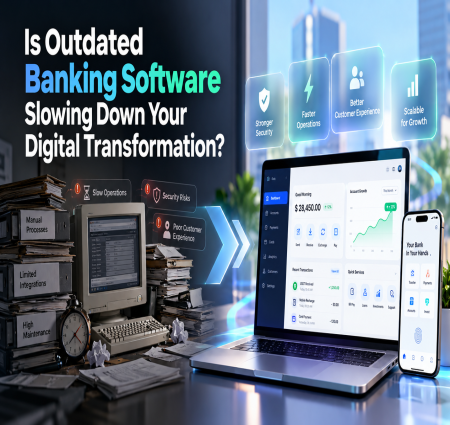
Is Outdated Banking Software Slowing Down Your Digital Transformation?

Is Outdated Banking Software Slowing Down Your Digital Transformation?
Customers expect banking to be fast, convenient, and accessible. They want to transfer money, check balances, manage payments, and access financial services without visiting a branch or waiting for manual approval. But what happens when your banking software cannot keep up with these expectations? Outdated banking systems can create operational bottlenecks, complicate integrations, and make new di... Read More
Customers expect banking to be fast, convenient, and accessible. They want to transfer money, check balances, manage payments, and access financial services without visiting a branch or waiting for manual approval. But what happens when your banking software cannot keep up with these expectations? Outdated banking systems can create operational bottlenecks, complicate integrations, and make new digital services harder to introduce. In my experience, the real challenge is not simply having old technology. It is whether that technology prevents your business from improving how banking services are delivered. The short answer: Yes, outdated banking software can slow digital transformation by limiting automation, increasing maintenance complexity, creating integration challenges, and making it harder to deliver modern customer experiences. Working with a Banking Software Development Company can help financial institutions assess these limitations and plan a practical modernization strategy. 5 Signs Your Banking Software Needs an Upgrade Not every legacy system needs immediate replacement. However, these warning signs deserve attention. 1. Manual Processes Are Consuming Valuable Time If employees regularly reconcile transactions manually, transfer data between disconnected systems, or correct recurring processing errors, your software may be creating unnecessary work. For example, a bank employee might need to export transaction records from one application and upload them into another system to complete reconciliation. Integrating these systems and automating suitable workflows can reduce repetitive tasks and improve operational consistency. 2. Integrating New Financial Services Is Difficult Modern financial services often depend on APIs, payment gateways, identity verification tools, and third-party financial platforms. Older banking applications may lack suitable integration capabilities or rely on outdated interfaces. This can make launching mobile banking features, digital payments, or new customer onboarding processes more complicated. Custom banking software development can help address these gaps through secure APIs and carefully designed system integrations. 3. Customers Experience Friction Slow account access, complicated onboarding, limited self-service options, and inconsistent information across digital channels can frustrate customers. Imagine a customer updating personal information through a mobile application but finding the old details displayed when contacting customer support. Such inconsistencies may indicate that different systems are not sharing information effectively. Modern digital banking solutions should support consistent customer experiences across web, mobile, and internal banking applications. 4. Maintenance Is Becoming More Complicated Legacy systems can depend on outdated technologies, specialized technical knowledge, or components that are difficult to maintain. When routine changes require significant development effort, your team may struggle to introduce new features quickly. Unsupported software components can also create security and compatibility concerns. Modernization provides an opportunity to review dependencies, improve maintainability, and establish a clearer technology roadmap. 5. Security and Compliance Requirements Are Harder to Manage Banking software must support appropriate access controls, transaction monitoring, audit trails, and data protection measures. Older systems may lack the flexibility to accommodate changing security requirements efficiently. However, replacing legacy software alone does not guarantee stronger security. The solution must include proper architecture, testing, monitoring, and ongoing maintenance. How a Banking Software Development Company Can Help A suitable development partner should begin by understanding your existing infrastructure, business objectives, operational risks, and customer requirements. Rather than recommending a complete rebuild immediately, the team should identify which components need improvement and which can remain in place. Depending on your requirements, banking software development services may include: Core banking modernization: Improving existing banking infrastructure while preserving essential business operations. Digital banking application development: Building web and mobile platforms for account access, payments, and customer self-service. Banking API integration: Connecting banking systems with payment providers, identity verification services, and other financial applications. Workflow automation: Reducing repetitive administrative tasks through automated processes and system integrations. Security-focused development: Implementing appropriate authentication, authorization, encryption, logging, and monitoring controls. Explore Banking Software Development to learn more about banking software development options. Should You Replace Your Entire Banking System? Not necessarily. The right approach depends on the condition of your existing infrastructure and the risks involved in changing it. Three common approaches are worth considering: Incremental modernization: Upgrade specific components, such as customer onboarding or payment integrations, while retaining the existing core system. System integration: Connect separate applications using secure APIs or integration layers to reduce data silos and improve information flow. Full platform replacement: Consider a new banking platform when the existing system cannot reasonably meet essential business, security, scalability, or maintenance requirements. A phased approach can make changes easier to test and manage. Before implementation, define migration requirements, data validation procedures, rollback plans, and service continuity measures. How to Start Your Banking Digital Transformation Start with a practical assessment instead of choosing technology first. Identify bottlenecks: Document recurring manual tasks, integration failures, customer complaints, and maintenance issues. Prioritize business outcomes: Decide whether your immediate goal is faster onboarding, improved payment processing, stronger security controls, or better scalability. Review your architecture: Evaluate system dependencies, APIs, data flows, infrastructure, and third-party services. Plan a phased roadmap: Select a manageable first project, establish measurable success criteria, and test the solution before wider deployment. Measure the results: Track relevant indicators such as processing time, error rates, system availability, and customer completion rates. This approach helps your organization invest in improvements that solve actual problems rather than introducing technology without a clear purpose. Conclusion: Turn Legacy Limitations Into an Opportunity Outdated banking software becomes a serious obstacle when it prevents your organization from responding to customer needs, integrating financial services, or maintaining reliable operations. The solution is not always to replace everything. A clear modernization strategy can help you determine where custom banking software development, system integration, or a new digital platform will deliver the greatest value. At CryptoApe, the starting point should be understanding your business requirements and identifying a suitable technical approach. Ready to modernize your banking infrastructure? Explore our Banking Software Development Company services to discuss your requirements and plan your next step.
Read Full Blog

[email protected] 17 Oct 2026 183 Views

What Should You Know Before Choosing a Cash App Clone for Your Fintech Business?

What Should You Know Before Choosing a Cash App Clone for Your Fintech Business?
Launching a fintech payment platform can look simple from the outside. Users send money, receive payments, manage wallets, and view transactions. But behind those basic actions are security controls, transaction processing, authentication, integrations, and compliance considerations. If you're considering a Cash App Clone, the important question isn't simply, "Does it look like Cash App?"... Read More
Launching a fintech payment platform can look simple from the outside. Users send money, receive payments, manage wallets, and view transactions. But behind those basic actions are security controls, transaction processing, authentication, integrations, and compliance considerations. If you're considering a Cash App Clone, the important question isn't simply, "Does it look like Cash App?" Instead, you should ask whether the solution can support your business model, target market, transaction requirements, security expectations, and future growth. What Should You Check Before Choosing a Cash App Clone? Before choosing a Cash App Clone, evaluate these areas: Core payment features: P2P transfers, wallets, transaction history, and payment processing. Security: Authentication, encryption, access controls, fraud monitoring, and secure transaction handling. Customization: Ability to adapt branding, features, workflows, and payment methods. Scalability: Infrastructure should support increasing users and transaction volumes. Integrations: Check support for payment gateways, banking services, KYC providers, notifications, and APIs. Compliance: Your platform must address the financial regulations applicable to the countries and services you operate in. Development support: Confirm whether updates, bug fixes, maintenance, and technical assistance are available. The right solution should fit your business-not force your business to fit a prebuilt product. What Is a Cash App Clone? A Cash App Clone is a customizable fintech application inspired by the functionality of popular digital payment platforms. It can provide features such as digital wallets, peer-to-peer payments, transaction tracking, user accounts, notifications, and payment integrations. However, a clone doesn't have to be an exact copy. A better approach is to use the underlying concept as a starting point and customize the product around your own customers and business requirements. Which Features Matter Most? When comparing different solutions, don't focus only on how many features are listed on a sales page. Look at whether those features actually work together as part of a reliable payment workflow. Essential User Features A practical digital payment platform may include: User registration and secure login Digital wallet management Peer-to-peer money transfers Bank account or payment integrations Transaction history Payment notifications User profile management QR-based payments Admin transaction monitoring Depending on your business model, you may also need merchant payments, recurring payments, virtual cards, or additional financial services. Why Security Should Be a Priority Fintech applications handle sensitive financial and personal information, so security cannot be treated as an optional add-on. Ask the development provider how the application handles authentication, authorization, sensitive data, transaction validation, API security, and suspicious activity. You should also understand how security updates and vulnerabilities will be handled after launch. A visually impressive application is not enough if its underlying architecture is difficult to secure. Can You Customize the Cash App Clone? Customization is one of the biggest factors to consider. Your platform may need different transaction limits, supported currencies, payment methods, user roles, fee structures, or verification workflows. Make sure the solution allows you to modify these components without rebuilding the entire application from scratch. Look for a solution that can accommodate your digital wallet platform, payment workflows, branding, and future feature requirements. Think About Scalability Before Launch A fintech platform should be designed with growth in mind. Even if you're starting with a limited user base, the architecture should allow you to add users, transactions, integrations, and new services without major disruption. Ask whether the provider can explain the application's architecture, database strategy, API structure, deployment process, and approach to performance optimization. Don't Overlook Compliance Financial technology is highly dependent on location, business model, payment services, and regulatory requirements. Requirements can differ significantly between countries and even between different types of financial services. Before launching, speak with qualified legal or compliance professionals about the regulations applicable to your specific operation. Your development team can implement technical workflows, but compliance decisions should be based on appropriate professional guidance. How Much Support Will You Get After Launch? The relationship with your development provider shouldn't necessarily end when the application goes live. Ask about: Bug fixing Security updates Server and deployment support Feature upgrades Third-party API changes Performance monitoring Technical documentation Good post-launch support can make a significant difference when your payment platform starts handling real users. Final Takeaway Choosing a Cash App Clone is less about finding the platform with the longest feature list and more about finding a solution that fits your fintech business. Evaluate security, customization, scalability, integrations, compliance requirements, and long-term technical support before making a decision. If you're planning to launch your own digital payment platform, start by defining your target users, payment workflows, revenue model, and required integrations. Then choose a development solution around those requirements. Halloween Special: If you're planning your fintech launch now, you can explore the limited-time offer of up to 60% OFF on Cash App Clone development and discuss your required features with a development team.
Read Full Blog
[email protected] 05 Oct 2026 227 Views

7 Features Users Expect From a Modern Cash App Clone

7 Features Users Expect From a Modern Cash App Clone
A modern payment app is no longer just a place to send and receive money. Users expect payments to be quick, secure, simple, and easy to track from the same screen. If you are considering a Cash App Clone, the real challenge is not copying the interface of an existing app. It is building the features and payment experience that users already consider essential. What Features Should a Modern Cash A... Read More
A modern payment app is no longer just a place to send and receive money. Users expect payments to be quick, secure, simple, and easy to track from the same screen. If you are considering a Cash App Clone, the real challenge is not copying the interface of an existing app. It is building the features and payment experience that users already consider essential. What Features Should a Modern Cash App Clone Have? A modern Cash App Clone should typically include: Instant peer-to-peer payments Digital wallet and balance management Bank and card integration Strong security and KYC Transaction history and notifications QR-code payments Admin controls and fraud monitoring These features create the foundation for a practical peer-to-peer payment app, while additional features can be added based on your target market and business model. 1. Instant Peer-to-Peer Payments Users should be able to send and receive money with minimal steps. A clean payment flow can include selecting a recipient, entering the amount, reviewing the transaction, and confirming it. For businesses, supporting configurable transaction limits and payment statuses also makes the system easier to manage. 2. Digital Wallet Management A built-in wallet gives users a clear view of their available balance and transaction activity. A well-designed wallet can support: Add and withdraw funds Balance updates Payment records Wallet-to-wallet transfers Configurable limits This becomes particularly important when developing a digital wallet app for multiple payment use cases. 3. Bank and Card Integration Users often want flexibility in how they fund transactions. A modern platform can connect supported bank accounts, debit cards, or other payment methods through appropriate payment integrations. The exact options depend on the country, payment providers, and regulatory requirements. 4. Security, KYC, and User Verification Convenience cannot come at the expense of security. A Cash App Clone should include authentication, encryption, device/session controls, transaction monitoring, and appropriate KYC/AML workflows. For example, higher-risk transactions can trigger additional verification rather than being processed automatically. 5. Transaction History and Notifications Users need to know where their money went. Detailed transaction records should show amounts, dates, recipients, payment status, and relevant references. Real-time or timely notifications can also alert users about successful payments, failed transactions, withdrawals, and account activity. 6. QR-Code Payments QR payments can make transactions faster in physical locations. A user could scan a merchant's QR code, review the payment details, and authorize the transaction without manually entering account information. This is useful when building a mobile payment app for both consumers and merchants. 7. Admin Dashboard and Fraud Controls The user-facing app is only one part of the system. Administrators need tools to manage users, transactions, verification requests, disputes, limits, and suspicious activity. A strong admin dashboard can give operators better visibility while allowing appropriate controls over the payment ecosystem. Conclusion Building a successful Cash App Clone is less about reproducing another app's screens and more about delivering a reliable payment experience. Instant transfers, wallets, integrations, security, transaction tracking, QR payments, and administrative controls provide a strong foundation. If you're planning a payment platform, start by defining your target users, supported payment methods, compliance requirements, and essential features before development begins.
Read Full Blog
[email protected] 16 Sep 2026 257 Views

Wefru Services

I want to Hire a Professional..