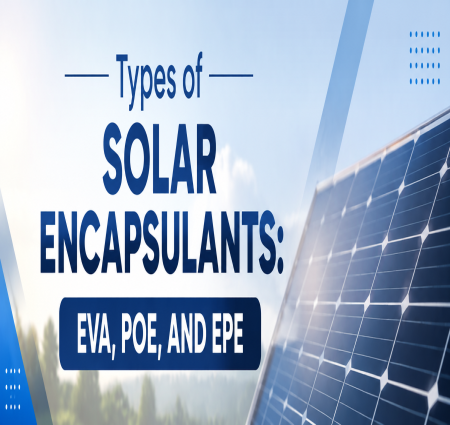
Solar panels are a big investment for any home or business. They sit on roofs or in fields for over 25 years. To make sure they keep working, they need protection from the inside out. Knowing the different Types of Solar Encapsulants is the first step to understanding how your panels stay safe from the weather. These materials are hidden inside the panel, but they do a lot of the hard work. What Is a Solar Encapsulant? A solar encapsulant is a thin layer of material that acts like glue and a shield. It is placed on both sides of the solar cells. When the panel is made, these layers are heated and pressed together. This process, called lamination, seals the solar cells inside a protective sandwich. This shield keeps the cells in place so they do not move or break during shipping or when the wind blows. Without this layer, solar cells would be exposed to the air. Air contains moisture and oxygen that can rust the metal parts of the cell. The encapsulant also helps the panel handle heat. It makes sure the glass and the backsheet stick together tightly. In simple terms, it is the glue that keeps the panel alive for decades. Why Choosing the Right Solar Encapsulant Matters Choosing the right material is a big deal for the lifespan of a solar panel. If the material fails, the whole panel can stop working. Some materials are better at blocking water, while others are better at letting light through. The solar encapsulant market offers a few different options because different locations have different weather. A panel in a dry desert needs different protection than one in a rainy tropical forest. If a panel uses a cheap or wrong material, it might turn yellow over time. This yellowing blocks the sun and makes the panel produce less power. It can also cause the layers to peel apart. When layers peel, water gets in and causes electrical shorts. Picking the right shield ensures the panel stays clear and strong for its entire life. Types of Solar Encapsulants There are three main materials used in the industry today. Each has its own strengths and weaknesses. Most people look at cost, how easy it is to use, and how well it protects against the environment. EVA (Ethylene Vinyl Acetate) Encapsulant This is the most common material used in the solar industry. It has been around for a long time and is trusted by many. EVA in Solar Panel is liked because it is easy to work with in factories and does not cost a lot of money. It is the standard choice for most regular rooftop panels. Key Features: High light transmittance: It lets almost all the sunlight pass through to the cells. Excellent adhesion: It sticks very well to the glass and the back sheet. Good flexibility: It can bend slightly without cracking, which protects the cells. Cost-effective: It is cheaper than other advanced materials. Easy processing: Factories can use it quickly without special machines. While it is popular, it has some downsides. Over many years, EVA can break down if it gets too hot or wet. This can lead to a vinegar-like smell and yellowing. It is great for standard use but might not be the best for very high-moisture areas. POE (Polyolefin Elastomer) Encapsulant This material is often seen as the high-end choice. It is much better at blocking water than EVA. Many bifacial panels, which catch light on both sides, use POE Encapsulant because it provides better protection for the sensitive back side of the cells. Key Features: Superior moisture resistance: It is like a raincoat that never leaks. Excellent PID resistance: It helps prevent power loss caused by stray electricity. High electrical insulation: It keeps the electricity flowing exactly where it should go. Better UV stability: It does not turn yellow even after years of harsh sun. Longer module life: Panels using this often last longer in tough weather. The main limitation of POE is the cost. It is more expensive to buy and slower to process in the factory. However, for high-efficiency panels, the extra cost is usually worth the better protection. EPE (EVA-POE-EVA) Encapsulant This is a newer "sandwich" style material. It tries to combine the best parts of EVA and POE. It has a core layer of POE and two outer layers of EVA. This way, you get the water protection of POE and the sticking power of EVA. Many people think EPE Encapsulant is the perfect middle ground. Structure of EPE Film: EVA outer layer: Provides great sticking power to the glass. POE core layer: Acts as a strong wall against moisture. EVA outer layer: Sticks tightly to the solar cells or backsheet. Key Features: Balanced performance: It works well in most weather conditions. Improved moisture barrier: Better than plain EVA at keeping water out. Strong adhesion: It sticks just as well as standard EVA. Cost-effective alternative to POE: It is cheaper than using a full POE sheet. Better durability than EVA: It lasts longer without breaking down. The main limitation is that it is slightly more complex to make. If it is not made correctly, the layers could separate, but this is rare with a quality Solar encapsulant manufacturer. Common Myths About Solar Encapsulants Myth 1: EVA is suitable for every solar panel. While EVA is good, it isn't perfect for every situation. For example, a glass-to-glass EVA Solar Panel might struggle with moisture more than a POE panel would. Some panels need more protection than EVA can give. Myth 2: POE is always the best choice. POE is great for blocking water, but it is expensive. If you live in a very dry place, you might be paying extra for protection you don't really need. EVA might be the smarter financial choice there. Myth 3: EPE performs the same as EVA. This is not true. EPE has that POE core, which makes it much better at stopping water and salt air. It is a step up in quality compared to basic EVA. Myth 4: Encapsulant selection doesn't affect module lifespan. This is a dangerous myth. The encapsulant is often the first thing to fail. If it fails, the panel dies. Choosing the right material can mean the difference between a 10-year life and a 30-year life. Myth 5: All encapsulants offer the same protection. As we have seen, they are very different. Some focus on letting light in, while others focus on keeping water out. Each of the types of solar encapsulants has a specific job. Why Choose Raynex Solar? Raynex Solar is a trustworthy manufacturer of solar encapsulants based in India that produces high-performance EVA, POE, and EPE encapsulant films for solar panels. Our films protect solar cells from moisture, ultraviolet rays, and other environmental factors, ensuring long-lasting functionality of modules. We are committed to maintaining consistent quality as well as providing products and services that satisfy the needs of solar panel producers. Raynex Solar has suitable options for you regardless of the type of encapsulant you require. Contact Raynex Solar Address: 806, Sarthana Business Hub, Sarthana-Jakatnaka, Surat , Gujarat - 395006. Phone: +91 87586 12077 Conclusion Understanding the different types of solar encapsulants helps you make better choices for your solar energy system. Whether you choose the cost-effective EVA, the high-protection POE, or the balanced EPE, the goal is the same: keeping your solar cells safe. Always check with your supplier to see which material is best for your local weather. By picking the right inner shield, you ensure your panels stay bright and powerful for years to come. FAQs What are the different Types of Solar Encapsulants? The main types used today are EVA (Ethylene Vinyl Acetate), POE (Polyolefin Elastomer), and EPE (a sandwich of EVA and POE). Which solar encapsulant is better: EVA, POE, or EPE? It depends on your needs. EVA is best for cost, POE is best for high-moisture and bifacial panels, and EPE is a great middle-ground for durability and price. Why is POE encapsulant used in bifacial solar panels? Bifacial panels are sensitive on both sides. POE is better at stopping moisture and PID (Potential Induced Degradation), which keeps these high-tech panels working longer. What is the lifespan of EVA, POE, and EPE encapsulants? Most are designed to last 25 to 30 years. However, POE and EPE generally stay clear and strong longer than EVA in harsh, hot, or humid environments. Is EPE better than EVA? In many ways, yes. EPE provides a better moisture barrier because of its POE core, while still sticking to the panel parts as well as EVA does.
Read Full Blog