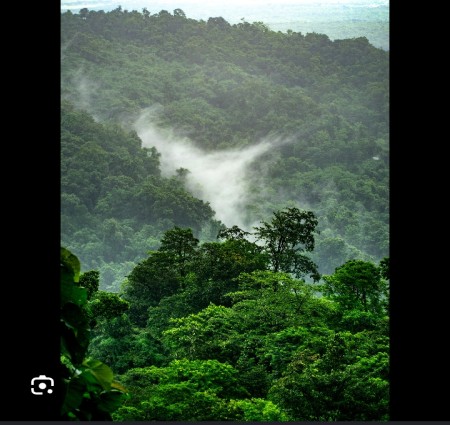
Jungle
꧁ Digital Diary ༒ Wefru – India's Largest Writing Community ༒ Read, Write & Grow ༒꧂

꧁ Digital Diary ༒ Wefru – India's Largest Writing Community ༒ Read, Write & Grow ༒꧂
Scan QR code to visit our website

A jungle is a dense, lush, and untamed forest ecosystem characterized by thick vegetation, a tangled understory, and rich biodiversity. These vibrant natural environments play a crucial role in regulating the Earth's climate, supporting countless species, and providing a powerful glimpse into the raw might of the natural world.The Ecosystem of a JungleJungles, typically found on the edges of tropical rainforests, are bustling ecosystems where sunlight struggles to pierce the dense leafy canopy above, forcing a complex array of vines, shrubs, and smaller plants to compete for space on the forest floor. The climate is typically humid and warm, fostering a thriving habitat for an incredible variety of animals, birds, and insects. From towering trees to microscopic fungi, every organism in the jungle relies on a delicate balance of survival, making it a masterclass in ecological interdependence.The Experience of a JungleStepping into a jungle can be both awe-inspiring and overwhelming. The atmosphere is dense and often filled with the earthy smell of damp soil and decaying leaves, while the air resonates with a cacophony of echoing animal calls and buzzing insects. For humans, navigating a jungle requires expertise, as the thick undergrowth and lack of visible paths can easily cause an inexperienced traveler to become disoriented. This intense, untamed environment starkly contrasts with the comfort and structure of modern, urbanized life, offering a humbling reminder of the vastness of the natural world.Importance and ConservationBeyond its beauty, the jungle is vital for global environmental health. These dense forests act as carbon sinks, absorbing greenhouse gases and producing oxygen, while also serving as a major source of medicinal plants and undiscovered biological resources. Unfortunately, these irreplaceable ecosystems face severe threats from deforestation, logging, and habitat destruction. Protecting the world's jungles is not only essential for preserving endangered wildlife but also for maintaining the overall stability of our planet's climate.
Verified Brand
Avul pakir jainulabdeen abdul kalam born on 15th October 1931 was an aerospace scientist who served and tha 11th president of India from 2002 to 2007 he spent nearly 14 years as a scientist and science administrator mainly at the difference research and development organisation (DRDO) and India space research organisation (ISRO) . He was known Ada missile man of India for his work on the deployment of ballistic missile and lunch vehicle technology. After leaving office Kalam become a visiting professor at shillong, IIM Ahmedabad and IIM Indore. Kalam dead on 27th July 2015 in Shillong following a cardiac arrest
Have a question about this post? Send it straight to the author — only they will see it.
We are accepting Guest Posting on our website for all categories.


Digital.blog.mehak
Verified Author Expert@DigitalDiaryWefru