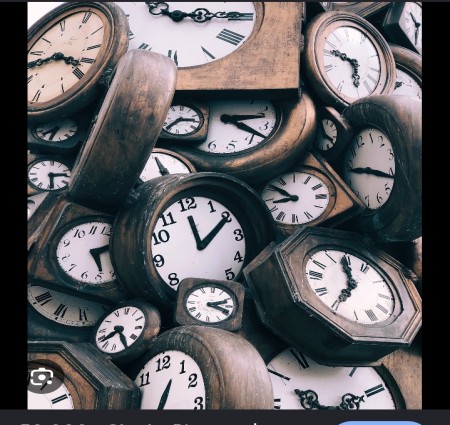
Clock
꧁ Digital Diary ༒ Wefru – India's Largest Writing Community ༒ Read, Write & Grow ༒꧂

꧁ Digital Diary ༒ Wefru – India's Largest Writing Community ༒ Read, Write & Grow ༒꧂
Scan QR code to visit our website

The invention of the clock is one of humankind's greatest achievements. It transformed how we understand, organize, and value time. From ancient shadow-tracking devices to modern digital wristwatches, the ability to measure time accurately has driven the development of global science, industry, and daily human coordination.The Dawn of Time MeasurementBefore mechanical clocks, early civilizations relied on nature to track the passage of time. Ancient Egyptians and Babylonians used the sun to create sundials and obelisks, using moving shadows to divide the day. However, these early tools were ineffective at night or on cloudy days. To solve this, inventors developed water clocks and hourglasses, which allowed people to measure the duration of time by the steady flow of liquid or sand.The Rise of Mechanical ClocksThe true turning point occurred during the Middle Ages in the 13th century when European inventors created the first mechanical clocks. These early machines were powered by heavy falling weights and controlled by a mechanism called an escapement, which regulated the release of energy.These early mechanical clocks were large and initially placed in town squares or church towers. In the 14th century, the pendulum was introduced, which dramatically improved accuracy and allowed clocks to keep standard, reliable time.Pocket Watches and PortabilityAs technology advanced, clocks became smaller. In the 16th century, German locksmith Peter Henlein invented the first portable timepieces, often referred to as pocket watches. This portable device allowed individuals to carry time with them, leading to the eventual invention of the modern wristwatch during the early 20th century.Modern Clocks and DigitalizationIn the 20th and 21st centuries, the clock underwent a technological revolution. The invention of the quartz clock in the 1920s used the vibrations of a quartz crystal to achieve unprecedented accuracy. Today, timekeeping has evolved into digital displays and smartwatches, relying on atomic vibrations for scientific accuracy.ConclusionThe invention of the clock is much more than the creation of a machine that tracks hours and minutes. It has shaped civilizations by enabling exact coordination in transportation, business, and scientific experiments. Time is one of our most precious resources, and the clock remains the most vital tool we have to organize our lives.If you need to expand this essay, I can help you:Add a section on atomic clocks and modern timekeeping.Provide a section highlighting famous clocks in history (like Big Ben or Jantar Mantar).Write a shorter, simplified version of this essay for a school presentation.
Verified Brand
Avul pakir jainulabdeen abdul kalam born on 15th October 1931 was an aerospace scientist who served and tha 11th president of India from 2002 to 2007 he spent nearly 14 years as a scientist and science administrator mainly at the difference research and development organisation (DRDO) and India space research organisation (ISRO) . He was known Ada missile man of India for his work on the deployment of ballistic missile and lunch vehicle technology. After leaving office Kalam become a visiting professor at shillong, IIM Ahmedabad and IIM Indore. Kalam dead on 27th July 2015 in Shillong following a cardiac arrest
Have a question about this post? Send it straight to the author — only they will see it.
We are accepting Guest Posting on our website for all categories.

Digital.blog.mehak
Verified Author Expert@DigitalDiaryWefru